Antioxidant Properties and Antimicrobial Activity of Pimpinella anisum against Pathogenic Bacteria in a Laboratory Setting

Article Sidebar
-
Antioxidant, Antimicrobial, Pimpinella anisum, Pathogenic Bacteria
Abstract
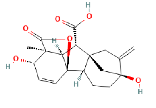
Anise, scientifically known as Pimpinella anisum, is a fragrant herbaceous flowering plant that is utilised for its aromatic and flavourful properties as well as its many culinary and cosmetic applications. Many traditional Arab dishes, especially those from Iraq, call for anise seeds or anise essential oils (EOs). This study set out to accomplish just that—extract the essential oils from aniseeds, identify their chemical composition, and investigate their antioxidant and antibacterial properties. Gas chromatographic-mass spectrometry (GCMS) has uncovered twenty previously unknown chemicals. The secondary metabolites detected are: dodeca-5,7-diyne-1,12-diol, Eucalyptol, 2-9,12-Octadecadienyloxy, Estragole, trans-Caryophyllene, trans-Caryophyllene, alpha-Linolenic acid, 1,3-Benzodioxole-5-carboxylic, L-Fenchone, Gibberellic acid, palmitic acid, Gadoleic acid, and Cyclopropanedodecanoic acid. Aniseed was found to posses powerful antioxidant activity for the scavenging of Nitric oxide radical scavenging and Hypochlorous acid scavenging in a concentration dependant way, the highest antioxidant activity was registered in a concentration of 10000 ppm. The scavenging of the nitric oxide radical and hypochlorous acid scavenging of Pimpinella anisum in methanol, ethanol and standards of antioxidant activity. The various types of extracts found included crude, Ethanol fraction and standard Curcumin extracts at Nitric oxide radical scavenging 40.58±0.47, 57.13±0.60 and Curcumin (standard) 94.73±0.98 respectively. The percentage of Sequestration of hypochlorous acid were recorded 180.26±3.92, 191.59±4.01 and Ascorbic acid (standard) 219.26 ± 4.74 respectively. Antimicrobial Activity of (Methanol, Ethyl acetate and Ethanolic extract) of Pimpinella anisum against Bacillus cereus observed was: 29.34±0.45, 22.40±0.31 and 31.15 ±0.48 respectively, while recorded 23.42±0.32, 18.47±0.25 and 28.13±0.42 respectively in Enterococcus faecalis. In the same times antimicrobial activity of Pimpinella anisum against Streptococcus pyogenes and Staphylococcus aureus recorded 26.38±0.39, 20.28±0.28 and 23.45±0.29 and 19.34±0.27, 26.34±0.40 and 29.00±0.41 respectively (Figure 3 and 4) comparison with two standard antibiotics RF-Rifampicin 33.07±0.52 and AP-Ampicillin 35.08±0.57.
Full text article
References
Burt, S. 2004. Essential oils: their antibacterial properties and potential applications in foods--a review. Int. J. of Food Microbiol. 94(3):223-53
Dhifi, W., S. Bellili., S. Jazi., N. Bahloul. and W. Mnif. 2016. The essential Oils' Chemical Characterization and investigation Some biological Activities: A Critical Review. Medicines.3(4):25-41
Djihane, B., N. Wafa., S. Elkhamssa., A. Maria. and Z.M. Mihoub. 2017. Chemical constituents of Helichrysum Italicum (Roth) G. Don essential oil and their antimicrobial activity against gram-positive and gramnegative] Bacteria, filamentous Fungi and Candida Albicans. Saudi. Pharm. J. 25(5):780- 87
Driscoll, J.A., S.L. Brody. and M.H. Kollef. Drugs. 2007. The epidemiology, pathogenesis and treatment of Pseudomonas aeruginosa infections. Drugs. 67(3):351-68
Ghasemzadeh, A., V. Omidvar. and H.Z. Jaafar. 2012. Polyphenolic content and their antioxidant activity in leaf extract of sweet potato (Ipomoea batatas). J. of Medicinal Plants Research. 6: 2971-2976.
Hammer, K., C. Carson. and R. Riley. 1999. Antimicrobial activity of essential oils and other plant extracts. J. Appl. Microbiol. 86:985-990
Heo, B.G., Y.J Park., Y.S. Park., J.H. Bae., J.Y. Cho., K. Park., Z. Jastrzebski. and S. Gorinstein. 2014. Anticancer and antioxidant effects of extracts from different parts of indigo plant. Ind Crop Prod. 56:9-16
Hossain, M.A., M.D. Shah., S.V. Sang. and M. Sakari. 2016. Chemical composition and antibacterial properties of the essential oils and crude extracts of Merremia borneensis. Science. J. of cognate chemst. 2(1):243-249
Karpanen, T.J., T. Worthington., E.R., Hendry., B.R. Conway. and P.A. Lambert 2008. Antimicrobial efficacy of chlorhexidine digluconate alone and in combination with eucalyptus oil, tea tree oil and thymol against planktonic and biofilm cultures of S. epidermidis. J. of antimicrob. Chemo. 62:1031-1036
Kifer, D., V. Muzingc. and M.S. Klaric. 2016. Antimicrobial potency of single and combined mupirocin and monoterpenes, thymol, menthol and 1,8-cineole against S. aureus planktonic and biofilm growth. The J. of Antibiotics (Tokyo), Zagreb. 69(9): 689-696
Lakehal, S., A. Meliani., S. Benmimoune., S.N. Bensouna., F.Z. Benrebiha. and C. Chaouia. 2016. Essential oil composition and antimicrobial activity of Artemisia herba-alba Asso grown in Algeria. Med. Chem. 6:435-439.
Lynch, A.S. and G.T Robertson. 2008. Bacterial and fungal biofilm infections. Annu. Rev. Med. 59:415-28
Macwan, S.R., B.K. Dabhi., K.D. Aparnathi. and J.B. Prajapati.2016. Essential oils of herbs and spices: Their antimicrobial activity and application in preservation of food. Int. J. currn. Microbiol. Appl. Sci, 5:885-901
Martini, A., H. Marzouki., H. Hentati., M. Aouni. and M. Mastoiri. 2016. Antibacterial and antibiofilm activities of Laurusno bilis L. essential oils against Staphylococcus aureus strains associated with oral infections. Current Research in Translational Medicine. 64(1):.29-34
Nageires, M. O., Â. Pawlowski., C. A. Zini., G. L Soares., A. S. Motta and A.P.G. Frazzon.2016. Antimicrobial and antibiofilm activity of Baccharis psiadioides essential oil against the antibiotic resistant strains of Enterobacter faecalis. Pharmaceutical Biology. 54(12): 3272-3279
Naik, G.H., K.I. Priyadarshini., V.J. Sata., M.M. Banavalikar., D.P. Sohoni., M.K. Biyani. and H. Mohan. 2003. Comparative antioxidant activity of individual herbal components used in ayurvedic medicine. Phytochemistry. 63(1): 97-104
Oke, F., B. Aslim., S. Ozturk. and S. Altundag. 2009. Essential oil composition, antimicrobial and antioxidant activities of Satureja cuneifolia Ten. Food Chemistry. 112: 874-879.
Said, A.; El-Gamal, M.S.; Abu-Elghait, M.; Salem, S.S. Isolation, Identification and Antibiotic Susceptibility Pattern of Urinary Tract Infection Bacterial Isolates. Lett. Appl. NanoBioSci. 2021, 10, 2820–2830.
Davies, J. Microbes have the last word: A drastic re-evaluation of antimicrobial treatment is needed to overcome the threat o antibiotic-resistant bacteria. EMBO Rep. 2007, 8, 616–621. [CrossRef] [PubMed]
Leekha, S.; Terrell, C.L.; Edson, R.S. General principles of antimicrobial therapy. In Mayo Clinic Proceedings; Elsevier: Amsterdam, The Netherlands, 2011; pp. 156–167.
Mattocks, C.J.; Morris, M.A.; Matthijs, G.; Swinnen, E.; Corveleyn, A.; Dequeker, E.; Müller, C.R.; Pratt, V.; Wallace, A. A standardized framework for the validation and verification of clinical molecular genetic tests. Eur. J. Hum. Genet. 2010, 18, 1276–1288. [CrossRef] [PubMed]
Shlaes, D.M.; Gerding, D.N.; John, J.F.; Craig, W.A.; Bornstein, D.L.; Duncan, R.A.; Eckman, M.R.; Farrer, W.E.; Greene, W.H.; Lorian, V.; et al. Society for Healthcare Epidemiology of America and Infectious Diseases Society of America Joint Committee on the Prevention of Antimicrobial Resistance guidelines for the prevention of antimicrobial resistance in hospitals. Infect. Control. Hosp. Epidemiol. 1997, 18, 275–291.
Machowska, A.; Stålsby Lundborg, C. Drivers of irrational use of antibiotics in Europe. Int. J. Environ. Res. Public Health 2019, 16, 27.
Laxminarayan, R.; Duse, A.; Wattal, C.; Zaidi, A.K.M.; Wertheim, H.F.L.; Sumpradit, N.; Vlieghe, E.; Hara, G.L.; Gould, I.M.; Goossens, H.; et al. Antibiotic resistance—The need for global solutions. Lancet Infect. Dis. 2013, 13, 1057–1098.
Kovaˇc, J.; Gavari´c, N.; Bucar, F.; Smole Možina, S. Antimicrobial and resistance modulatory activity of Alpinia katsumadai seed phenolic extract, essential oil and post-distillation extract. Food Technol. Biotechnol. 2014, 52, 248–254.
Sharafan, M.; Jafernik, K.; Ekiert, H.; Kubica, P.; Kocjan, R.; Blicharska, E.; Szopa, A. Illicium verum (Star Anise) and Trans-Anethole as valuable raw materials for medicinal and cosmetic applications. Molecules 2022, 27, 650.
Huang, Y.; Zhao, J.; Zhou, L.;Wang, J.; Gong, Y.; Chen, X.; Guo, Z.;Wang, Q.; Jiang,W. Antifungal activity of the essential oil of Illicium verum fruit and its main component trans-anethole. Molecules 2010, 15, 7558–7569.
Salem, M.A.; El-Shiekh, R.A.; Hashem, R.A.; Hassan, M. In vivo antibacterial activity of star anise (Illicium verum Hook.) Extract Using Murine MRSA skin infection model in relation to its metabolite profile. Infect. Drug. Resist. 2021, 14, 33.
Bin Muhsinah, A.; Maqbul, M.S.; Mahnashi, M.H.; Jalal, M.M.; Altayar, M.A.; Saeedi, N.H.; Alshehri, O.M.; Shaikh, I.A.; Khan, A.A.L.; Iqubal, S.S.; et al. Antibacterial activity of Illicium verum essential oil against MRSA clinical isolates and determination of its phyto-chemical components. J. King Saud Univ. 2022, 34, 101800.
Authors

This work is licensed under a Creative Commons Attribution 4.0 International License.