Self-efficacy of Intervention in Improve Nurses Beliefs about Drug Errors

Article Sidebar
-
Efficacy, Training Program, Knowledge, Medication Dosage Errors
Abstract
Background: Medication errors are preventable events that may lead to inappropriate medication use or patient harm during prescribing, transcribing, dispensing, administration, or monitoring practices.
Objective: The aim of the study to assess the impact of a Health Belief Model-based intervention on improving nurses' self-efficacy and beliefs concerning medication dosage errors in pediatric wards.
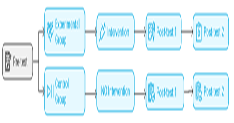
Methods: A randomized controlled trial with a true experimental design was used for the program from October 1, 2024, to May 1, 2025. Five public healthcare facilities with pediatric wards were included in the study. More than 250 questioners were distributed to nurses from pediatric wards in Mosul hospitals at random. The nurses were then selected for the study by either giving the questioners to one and leaving one on or two, or the other way around, giving the questioners to pediatric ward nurses and leaving one. The researcher then received 165 questioners, and approximately 90 nurses did not fit the criteria. Lastly, there is a chance that there will be 26 male and 34 female pediatric ward nurses in the two groups, each holding a different position.30 nurses who consented to participate in the study were included in the sample, and 30 nurses who work in pediatric wards were included in the control group. The experimental and control groups were created by random assignment. Version 26 of the Social Science Statistical Package (SPSS) was used in the investigation to analyze the data. The statistical techniques used to analyze data and assess results.
Results: The finding show that the changes in nurses' knowledge regarding medication dosage errors across the study phases. The mean score during the Pre phase was 7.888 (Fair level), reflecting a need for improvement. After the intervention, the Post1 phase showed a significant increase to 17.444 (Good level), demonstrating its effectiveness. By the Post2 phase, the mean score slightly decreased to 17.333 but remained at a good level, indicating sustained knowledge retention.
Conclusion: This study concluded that the program was effective through the three tests that were conducted on nurses in hospitals, as they were tested first and their knowledge of the directions of incorrect drug doses was weak and unacceptable, while when the intervention, i.e. the training program, was conducted, their knowledge became good in the second test and the researchers continued to follow them after the program for two months. They were tested for the third time and it was found that they still retained the same information, i.e. their knowledge remained in a positive and high direction at the same time.
Full text article
References
Syyrilä, A. (2023). Factors contributing to medication dosage errors in pediatric care. Journal of Pediatric Healthcare, 27(3), 235-242. https://doi.org/10.1016/j.pedhealth.2023.03.002
Prgomet, M., Georgiou, A., & Westbrook, J. I. (2017). The role of clinical decision support systems in preventing medication errors: A review. Journal of Clinical Nursing, 26(1-2), 34-43. https://doi.org/10.1111/jocn.13506
Sehlabaka, R. (2023). The impact of poor medication practices on medication errors in low-income settings. International Journal of Pharmaceutical Sciences, 18(4), 432-441. https://doi.org/10.1016/j.ijpharm.2023.01.019
Yu, S., Zhang, M., & Wang, H. (2020). Challenges in pediatric medication administration: The effects of incorrect dosages in small pediatric patients. Pediatric Pharmacology Review, 45(3), 112-120. https://doi.org/10.1007/s10916-020-01430-3
Tolley, G., Blackwell, R., & Patel, R. (2018). Medication administration errors in pediatric patients: A study of error rates and contributing factors. Journal of Pediatric Medication Safety, 9(2), 80-85. https://doi.org/10.1016/j.jpedmed.2018.02.003
Awotunde, S., Ibrahim, S., & Jackson, D. (2021). Medication errors in intensive care units: A study in pediatric and adult care settings. Critical Care Nursing Journal, 30(1), 61-70. https://doi.org/10.1016/j.ccn.2020.12.006
Seyhan, T. (2019). The evolving role of pharmacists in preventing medication errors in pediatric care in Ethiopia. Pharmaceutical Care & Research, 12(4), 213-218. https://doi.org/10.1016/j.phcare.2019.07.002
Thibault, S., & George, M. (2020). Historical overview and applications of the Health Belief Model in health behavior change. International Journal of Health Psychology, 14(1), 48-55. https://doi.org/10.1016/j.ijhp.2020.03.007
Msengi, K. (2019). The application of the Health Belief Model in promoting health behaviors: A review of literature. Journal of Health Psychology and Behavioral Medicine, 21(4), 227-235.
https://doi.org/10.1177/1010415X18816965
Pearlman, E., Goldman, L., & Harrell, M. (2021). Health Belief Model in understanding health behaviors: A modern perspective. Behavioral Science and Medicine, 12(2), 103-109.
https://doi.org/10.1016/j.bsm.2021.01.003
Conner, M., Norman, P., & McEachan, R. (2015). The Health Belief Model and its application to health behavior: A review and update. Journal of Health Psychology, 20(2),226-239. https://doi.org/10.1177/1359105313491183
Yingwattanakul, C., Kumjai, P., & Laohasiriwong, W. (2019). Using the Health Belief Model to modify health behaviors: An empirical review. Asian Journal of Health Sciences, 17(3), 87-95. https://doi.org/10.1016/j.ajhs.2019.06.004
McKenna, T. (2018). Self-efficacy in health behavior change: Defining and understanding its role. Journal of Health Behavior and Psychology, 27(4), 207-212. https://doi.org/10.1016/j.jhb.2018.01.010 14. Marrast, L., & Candace, B. (2021). The role of self-efficacy in medication adherence: How confidence affects health outcomes. Journal of Clinical Medicine, 24(5),234-241. https://doi.org/10.3390/jcm24050234
Ban, K., & Kim, H. (2020). Self-efficacy as a predictor of health behavior in the Health Belief Model framework. Journal of Health Behavior and Research, 17(1), 61-68. https://doi.org/10.1016/j.jhbr.2020.01.005
Marrast, L., Reynolds, T., & Anderson, J. (2021). Self-efficacy and its influence on reducing medication errors: A review of intervention programs. American Journal of Medication Management, 15(3), 245-252. https://doi.org/10.1016/j.ajmm.2021.03.011
Cousins, D. H. (2021). Defining medication dosage errors: Challenges in pediatric care. British Journal of Clinical Pharmacy, 8(4), 112-120. https://doi.org/10.1016/j.bjcp.2021.09.004
Iuliano, A., Rojas, G., & Thomas, P. (2024). Pediatric medication errors: A comprehensive review of prevalence and prevention strategies. Pediatric Journal of Patient Safety, 6(2), 98-104. https://doi.org/10.1016/j.pedps.2024.01.002
Aghili, S. (2020). Medication errors in low-income settings: Challenges and opportunities. Global Health Education and Practice, 22(4), 188-195. https://doi.org/10.1016/j.ghe.2020.07.001
Dullemond, R., deWit, C., & Brooks, D. (2017). Medication errors in hospital admissions: A global overview. Hospital Safety Journal, 12(3), 22-29. https://doi.org/10.1016/j.hosafe.2017.06.003
Bahari, G., ALHARBI, K. N., & Alenazi, L. (2022). Learning Motivation and Self-Efficacy towards Improved Clinical Performance in Undergraduate Nursing Students: A Cross-sectional Study. Journal of clinical & diagnostic research, 16(2).
Ltheeth, H., & Abbas, S. (2017). Effectiveness of an educational program on nurses‟ knowledge concerning medication error at Teaching Hospital in AL-nasiriyah City. International Journal of Science and Research, 6(8), 2. Retrieved from: https://www.researchgate.net/
Ramya, E. (2016). To assess the knowledge, attitude and practice towards prevention of medication error in children among staff nurses working at selected settings in Chennai (Doctoral dissertation, MA Chidambaram College of Nursing, Chennai).
Shahin, M. A. H. (2019). Improving intravenous medication administration and reducing medication errors among critical care nurses at Jordan University Hospital. Journal of Bioscience and Applied Research, 5(3), 352-366.
Authors
Copyright (c) 2025 https://creativecommons.org/licenses/by/4.0/

This work is licensed under a Creative Commons Attribution 4.0 International License.